Read, write, and receive premium articles, reader support, and much more!
Join Prof.Peter Paper Trails ★
Naivity
Why must technology, legislation, and music witness dignity, not spectacle?

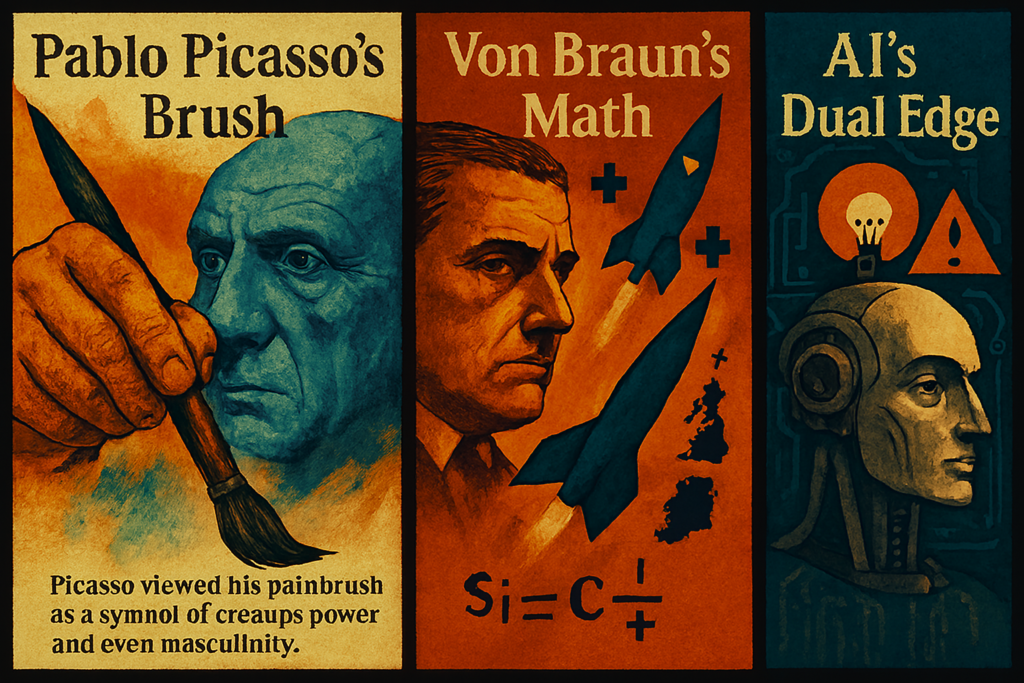
AI and the Song of Civil Duty
Why must Technology, Legislation and Music witness Dignity not Spectacle?
A peace way against narcissistic spectacle.
Naivity; Recent developments in the Middle East remind us how fragile public trust can be when world leaders trumpet competitors as “renowned apes,” steering nations into die‑or‑surrender games. These outbursts are not just political theater—they echo through families, generations, and civil debates, leaving scars that culture and technology must help heal.
In such moments, Artificial Intelligence offers a counterweight. Not by replacing human judgment, but by raising second opinions into balanced perspectives. Where narcissistic outbursts seek attention, AI can boost mental peace. Where leaders mock, AI can witness. Where spectacle dominates, AI can stabilize.
Families feel this most directly. AI becomes a quiet companion, a second opinion in the palm. It preserves dignity by reducing exposure to ridicule and propaganda. Parents and children alike can check claims, compare perspectives, and relax. Relief is not a luxury—it is a civil necessity.
Platforms, meanwhile, must install safety belts. Just as pilots don’t fly Boeing without training, platforms must not hand deepfake instruments to amateurs. Misuse cannot be halted entirely, but it can be isolated. Simulation should serve health and safety, not entertainment. Reckless tools belong in the second row; the first row deserves trust.
Legislation, too, is a civil duty. It is not ours to dictate—it belongs to public debate. But lawmakers who mock AI’s flaws while failing to legislate responsibly feed replacement fears. Ignore the voter, and you risk making them believe they’ve already been replaced. Witnessing, not mockery, is the path to civil duty. Gen Z sees this through the lens of justice. For them, open education and self‑training are not just opportunities—they are fairness itself. AI democratizes learning, lowering barriers for lower‑income classes. It empowers competence without gatekeepers. In their eyes, inclusion is justice, and justice is peace. Culture reminds us of this truth. Marvin Gaye’s timeless question, carried forward by Playing for Change, asks us to witness civil war and generational sagas. “What’s going on?” is not just a lyric—it is a civic plea. Family struggles and social wounds are inherited across generations, and healing requires presence, not spectacle. AI, like music, can be a witness to dignity.
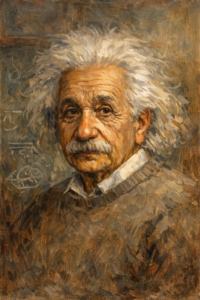
Einstein was Right
And remains righteous— in his principled thought: “Who understands the roots and branches of Mother Nature will find explanation to all and everything happening around us.” AI is not greater than Einstein. It does not replace principled thought; it simply connects the dots faster. Where Einstein saw the tree of nature, AI helps communities trace its roots and branches more clearly, balancing growth across generations.
The forest, after all, is the ultimate unbiased library. AI, when disciplined, is not a neon god—it is a librarian, connecting roots to branches, helping us witness civil duty and preserve dignity.
SYSTEM NOTICE & DISCLAIMER
Prof. Peter exercises the utmost care; all articles, research, and source documents are authentic unless explicitly stated otherwise.
None of the publications shall be interpreted as medical, psychological, or professional advice; they aim to provide profound insights rather than absolute truths.
In case of dispute, please email mohd@profpeter.online and we will sort it out in good faith.
Visually, this space is supported by custom illustrations created by Banana Pro, alongside digital conceptual AI aids.